What Happens to an Aircraft When It Breaks the Sound Barrier?
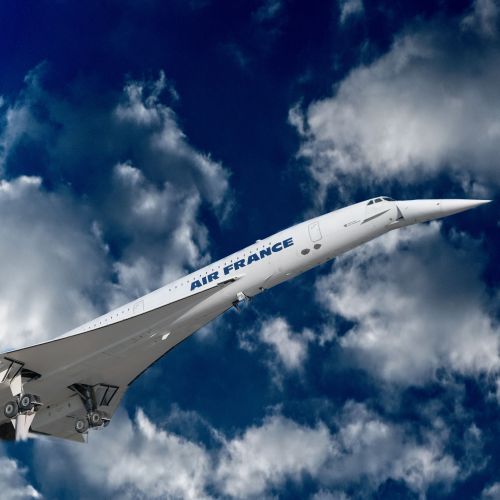
Few engineering challenges have captured the human imagination as completely as supersonic flight. The idea of travelling faster than sound — faster than the noise an aircraft makes — seems almost contradictory. Yet it is not only possible. It has been routine in military aviation for over seventy years and was commercially available to passengers for nearly three decades aboard Concorde. Understanding what supersonic flight actually means — physically, aerodynamically and structurally — is the starting point for understanding one of aviation’s most demanding engineering disciplines.
Furthermore, with NASA’s X-59 programme now actively demonstrating quiet supersonic technology and commercial operators preparing next-generation supersonic aircraft, the engineering of high-speed flight has never been more relevant.
What Sound Actually Is — and Why Speed Matters
Sound is a pressure wave. When an object moves through air, it disturbs the air molecules around it — creating alternating regions of compression and rarefaction that propagate outward in all directions at the speed of sound. At sea level and standard temperature, sound travels at approximately 340 metres per second. At altitude, where air is colder and less dense, that figure drops — to around 295 metres per second at 35,000 feet.
The Mach number expresses an aircraft’s speed as a ratio of the local speed of sound. Mach 1 means travelling at exactly the speed of sound. Mach 2 means travelling at twice that speed. Therefore, the Mach number is not a fixed velocity — it changes with altitude and temperature. An aircraft flying at Mach 1 at sea level is moving significantly faster than an aircraft flying at Mach 1 at cruise altitude. This distinction matters considerably for engineering design.
The Transonic Region — Where Problems Begin
The difficulties of supersonic flight do not begin at Mach 1. They begin considerably earlier — in the transonic regime, typically between Mach 0.8 and Mach 1.2. This is where the engineering challenge becomes most complex and most dangerous.
As an aircraft accelerates toward Mach 1, air flowing over the curved upper surface of the wing accelerates faster than the aircraft itself. At a specific speed — the critical Mach number — that airflow over the wing reaches Mach 1 locally, even though the aircraft is still flying subsonically. Shock waves form on the wing surface. Drag rises sharply. Airflow separates from the wing. The centre of lift shifts rearward, pitching the nose down. In early high-speed aircraft, this produced violent buffeting and loss of control — the phenomenon that gave rise to the phrase the sound barrier.
Furthermore, as the aircraft continues to accelerate through the transonic region, the shock wave moves aft and strengthens. Wave drag — a form of aerodynamic resistance unique to compressible flow — rises dramatically. This drag rise requires substantially more thrust to overcome. Therefore, the transonic regime demands both aerodynamic design solutions and significant propulsive power to push through.
Breaking the Sound Barrier — What Actually Happens
At Mach 1, something fundamental changes in the aerodynamic environment around the aircraft. Below Mach 1, pressure disturbances propagate ahead of the aircraft — the air receives warning of the approaching object and begins to move aside. At Mach 1 and above, the aircraft outruns its own pressure disturbances. The air ahead receives no warning. The aircraft arrives before the sound it makes.
The pressure waves the aircraft generates can no longer propagate ahead. They pile up and coalesce into a shock wave — a thin region of extremely rapid pressure, temperature and density change. Across a shock wave, these properties change almost instantaneously. Pressure rises sharply. Temperature rises. The flow decelerates. Moreover, kinetic energy converts into heat within the shock — creating aerodynamic heating that intensifies with speed. At Mach 2, skin temperatures on aluminium airframe surfaces reach values that begin to compromise the material’s structural properties. At Mach 3 and above, conventional aluminium is no longer viable — titanium and specialised alloys become necessary.
Shock Waves and Aircraft Design
At supersonic speeds, shock waves form at every point where the aircraft’s geometry causes flow direction to change — the nose, the wing leading edges, the canopy, the engine intakes and any protrusion from the fuselage. The character of these shock waves — their angle, strength and interaction with each other — depends on the aircraft’s geometry, speed and altitude.
Engineers design supersonic aircraft to manage these shock waves deliberately. A pointed, sharp nose generates an oblique shock wave — angled back from the nose tip rather than perpendicular to the flow. Oblique shocks produce less drag than normal shocks. Therefore, pointed noses are universal on supersonic aircraft. Wing leading edges are similarly sharpened and swept. The cross-sectional area of the fuselage must change gradually along its length — the area rule — to minimise the strength of the shock system the aircraft generates. Furthermore, wing sections become thinner and more symmetrical at supersonic speeds — the high-camber, high-lift sections suited to subsonic flight generate too much wave drag at supersonic velocities.
Structural and Thermal Engineering Demands
Supersonic flight places structural demands on aircraft that subsonic design simply does not encounter. Aerodynamic loads at high speed are substantially greater than at low speed — increasing with the square of velocity. A structure designed for subsonic cruise must be significantly stiffer and stronger to survive supersonic flight loads without excessive deformation.
Thermal management is equally demanding. Aerodynamic heating at supersonic speeds raises skin temperatures substantially above ambient. Concorde’s aluminium airframe reached skin temperatures of around 127°C at Mach 2.02 — within the usable range for aircraft aluminium alloys, but only just. SR-71 Blackbird, cruising at Mach 3.2, required a titanium structure throughout — aluminium would have softened and failed at the temperatures involved. Consequently, material selection for supersonic aircraft is driven not just by strength and weight, but by thermal performance across the entire flight envelope.
Control and stability present a further engineering challenge. The aerodynamic centre — the point at which lift acts on the aircraft — shifts rearward as speed increases through the transonic regime. At supersonic speeds it settles at approximately 50% of the wing chord — significantly further aft than its subsonic position. This shift alters the aircraft’s stability characteristics fundamentally. Therefore, supersonic aircraft require active flight control systems to manage what would otherwise be severe instability — particularly during the transonic transition.
Why Supersonic Engineering Matters Today
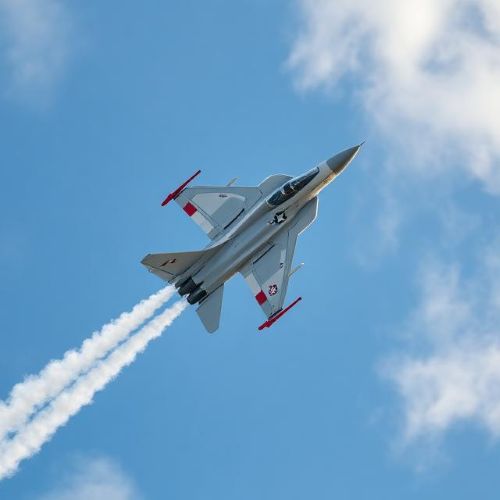
The engineering disciplines that supersonic flight demands — aerodynamic analysis, thermal management, structural design, materials engineering, propulsion integration and flight test validation — represent some of the most technically demanding work in aerospace. Moreover, the renewed push for commercial supersonic aviation and sixth-generation military aircraft means these disciplines are as relevant and as active today as at any point in aviation history.
At CNR, precision mechanical engineering and analytical capability span the aerospace disciplines that high-speed flight engineering demands — from structural analysis and system design through to bespoke test rig development and precision instrumentation. The engineering thinking behind supersonic flight is the same rigorous, first-principles approach that underpins every precision mechanical engineering challenge.
Note: This article is for general information only Image Credits: Jesús Esteban San José