Why Does How You Design Determine How Well Something Can Be Built?
Engineering design and manufacturing are often treated as separate activities. A design team produces drawings. A manufacturing team works out how to make them. Problems emerge at the handover. Redesigns follow. Costs rise. Timelines slip. This sequential approach is one of the most persistent sources of unnecessary cost and delay in engineering development programmes. Design for manufacture — DFM — exists to prevent it.
Research consistently shows that over 70% of a product’s manufacturing costs are determined during the design phase — before a single component is machined or fabricated. Furthermore, design decisions made early in a programme are the hardest and most expensive to change later. Therefore, integrating manufacturing thinking into the design process from the outset is not simply good practice. It is one of the highest-value engineering decisions a programme can make.
What Design for Manufacture Actually Means
Design for manufacture is the discipline of designing components and assemblies with the manufacturing process explicitly in mind. It does not mean compromising engineering performance to simplify production. It means making design decisions that achieve the required performance through geometry, material and process choices that are practical, cost-effective and reliable to produce.
Good DFM begins before any detailed CAD work starts. It starts with process selection — understanding which manufacturing method will produce the component and designing the geometry around the constraints and capabilities of that process. Moreover, it continues through every stage of detailed design — influencing feature geometry, tolerance specification, material selection and assembly sequence simultaneously. Consequently, DFM is not a checklist applied at the end of a design process. It is a discipline that runs through the entire programme from the first line drawn.
Process-Specific Design Thinking
Every manufacturing process has specific design requirements. Understanding these — and designing to them from the outset — is the foundation of effective DFM.
Machined components require adequate tool access to every feature. Internal corners must accommodate standard tool radii. Blind holes must be drillable to the required depth with standard tooling. Deep, narrow slots are difficult to machine cleanly and should be avoided where possible. Furthermore, unnecessarily tight tolerances add machining time and inspection cost without adding engineering value. Therefore, tolerances should reflect what the application actually requires — not what seems safe or conservative.
Castings and mouldings require draft angles on vertical faces to allow the part to release from the tool. Wall thickness should remain consistent to avoid shrinkage defects. Abrupt section changes create stress concentrations and solidification problems. Moreover, parting line placement influences both tooling cost and surface quality — a decision that is far easier to get right at the design stage than to correct after tooling is committed.
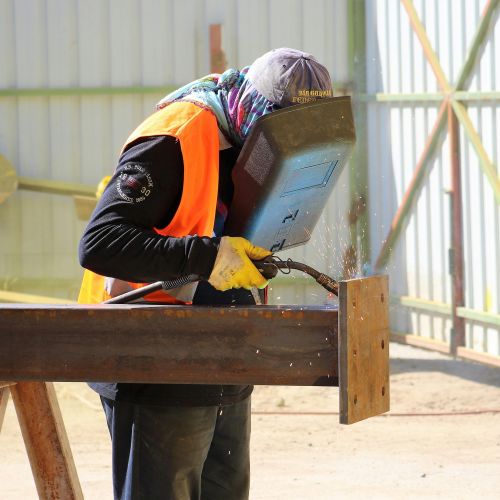
Fabrications require weld joint access for both welding and inspection. Joint designs should minimise distortion during welding and allow for correction where distortion cannot be avoided. Furthermore, assembly sequence must allow each weld to be completed before the geometry closes off access to adjacent joints. In other words, the sequence in which a fabrication is assembled is a design decision — not a manufacturing problem to solve later.
Tolerances — the Most Expensive Design Decision
Tolerance specification is where DFM has the most direct impact on manufacturing cost. Tighter tolerances require more precise machining, more careful process control and more thorough inspection. Each step adds time and cost. Moreover, unnecessarily tight tolerances on non-critical features introduce manufacturing risk without engineering benefit — increasing the likelihood of non-conformance and the cost of inspection and rework.
Good DFM requires engineers to specify tolerances that reflect genuine functional requirements. A bearing housing requires a precise bore diameter. A structural bracket does not require the same precision on its mounting hole positions. Distinguishing between these cases — and tolerancing accordingly — is one of the most valuable engineering contributions a designer can make to a manufacturing programme. As a result, tolerance rationalisation often delivers significant cost reduction without any compromise to engineering performance.
Minimising Part Count
One of the most powerful DFM principles is part count reduction. Every component in an assembly adds cost — in material, machining, purchasing, inspection, storage, assembly time and the potential for a non-conformance at every stage. Reducing part count by combining features into single components, eliminating unnecessary fasteners or rethinking assembly architecture reduces cost at every stage of the programme simultaneously.
Furthermore, fewer parts mean fewer interfaces. Every interface between components introduces tolerance stack, assembly variation and the potential for misfit. Consequently, reducing part count improves not just manufacturing cost but assembly quality and dimensional consistency in the finished product. At CNR, DFM principles inform every design from the earliest concept stage — because the time to reduce part count is before the detail design is committed, not after drawings are issued.
DFM and Manufacturing Support
Effective DFM requires engineers who understand both design and manufacturing. This is not as common as it should be. Designers who have never spent time in a machine shop or fabrication facility sometimes produce geometries that are theoretically valid but practically very difficult to make. Moreover, manufacturing teams who receive designs without early DFM input spend significant time raising queries, requesting modifications and working around features that should never have appeared in the first place.
The most effective approach is close collaboration between design and manufacturing from the programme outset. At CNR, manufacturing support is an integral part of the engineering design service — not a separate activity. Over 35 years of experience across aerospace, automotive, defence, energy and research has built a detailed understanding of what manufacturing processes can and cannot do. That understanding feeds directly into every design decision — from the first concept sketch through to the final detail drawing. If your programme needs design that is built to be made, that experience is where the conversation starts.
Note: This article is for general information only Image Credits: AI