What Should Good CAD Modelling Actually Deliver for an Engineering Programme?
CAD is everywhere in modern engineering. Every mechanical design consultancy offers it. Every engineering team uses it. However, the quality of CAD varies enormously — and the difference between good CAD and poor CAD has real consequences for manufacturing, assembly, cost and programme risk. Understanding what good CAD design services should actually deliver is therefore more important than it might initially appear.
CAD is not simply a drawing tool. Used well, it is the engineering language through which a design is defined, communicated and transferred to manufacture. Furthermore, the structure, integrity and intelligence of a CAD model determines how useful it remains throughout a programme — not just at the point of creation.
More Than 3D Geometry
A common misconception is that CAD modelling is primarily a visualisation exercise. In reality, a well-built CAD model carries far more engineering information than geometry alone. It encodes design intent — the relationships between features, the constraints that govern how the design behaves when dimensions change, and the hierarchy of decisions that produced the final form.
Parametric modelling is the foundation of professional mechanical CAD. In a parametric model, dimensions and features relate to each other through defined rules and relationships. Changing a single dimension updates the model intelligently — maintaining the design intent rather than simply shifting geometry. Moreover, parametric structure allows engineers to explore design variants rapidly. A wall thickness change, a feature relocation or a configuration switch takes seconds in a well-built parametric model. Therefore, parametric CAD is not simply more efficient than unstructured modelling. It is a fundamentally more capable engineering tool.
Design Intent — the Most Important Thing CAD Must Capture
Design intent is the engineering thinking embedded in a CAD model. It answers the question — why is this feature here, and what must remain true about it regardless of how the design evolves?
Good design intent captures the load paths a structure must carry, the assembly interfaces that must be maintained, the clearances that must be preserved and the manufacturing constraints that govern how each feature is produced. Furthermore, it anticipates change. Engineering designs rarely reach manufacture unchanged. A CAD model built with clear design intent accommodates revision efficiently — without requiring a rebuild from scratch every time a requirement shifts. Consequently, design intent is not an abstract quality. It is a practical engineering asset that saves time, reduces error and protects programme momentum throughout the development cycle.
Detail Drawing and Drawing Standards
CAD models alone do not manufacture components. Detail drawings translate the 3D model into the precise, unambiguous instructions that manufacturers, machinists and fabricators need to produce parts correctly. Good detail drawings are therefore an essential deliverable — not an afterthought.
A well-produced detail drawing defines geometry, tolerances, surface finish requirements, material specifications, heat treatment requirements and any special manufacturing instructions. It applies geometric dimensioning and tolerancing correctly — communicating not just what a dimension should be, but how much variation is acceptable and in which direction. Furthermore, drawing standards matter. BS 8888 in the UK governs technical product documentation. Drawings that comply with the correct standard communicate unambiguously — reducing the risk of misinterpretation during manufacture, inspection or assembly. At CNR, drawing production follows rigorous standards — because a drawing that leaves any room for misinterpretation is a drawing that introduces manufacturing risk.
CAD and Design for Manufacture
Good CAD design integrates manufacturing thinking from the outset. A feature that is straightforward to model in CAD may be difficult, expensive or impossible to machine, cast or fabricate in the real world. Therefore, experienced CAD engineers consider the manufacturing process alongside the design — not after it.
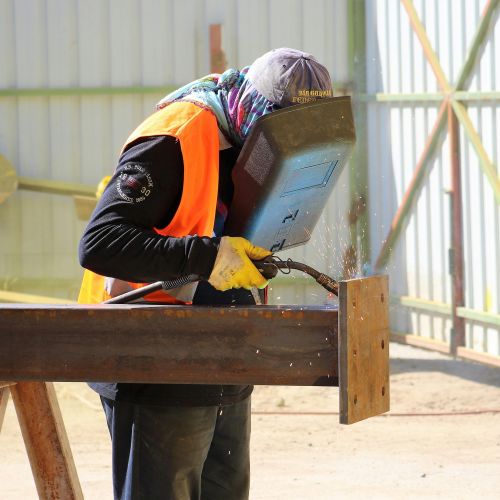
This means understanding machining access and tool paths for milled and turned components. It means specifying appropriate draft angles for castings and mouldings. It means designing weld joints that are accessible and inspectable. Moreover, it means avoiding unnecessarily tight tolerances that add manufacturing cost without adding engineering value. Design for manufacture is not a constraint on design freedom. It is an engineering discipline that produces better, more cost-effective designs by connecting the digital model to the physical reality of production. In other words, the best CAD is always made with the manufacturing process in mind.
Assembly Modelling and Interface Management
Most engineering products are assemblies — multiple components that must fit together, function together and be assembled in a defined sequence. Assembly modelling in CAD defines how components relate to each other in space, confirms that clearances and fits are correct and identifies clashes before manufacture begins.
Interface management is particularly critical in complex assemblies. Where components from different design teams, different suppliers or different programmes must connect, the CAD model is the primary tool for confirming compatibility. Furthermore, assembly sequence modelling confirms that components can actually be assembled in practice — identifying access constraints, interference conditions and assembly fixture requirements before anyone attempts to build the product. Consequently, assembly modelling catches problems at their lowest possible cost — on screen rather than on the shop floor.
What to Look for in a CAD Design Services Partner
The quality of CAD services depends not on software but on the engineers using it. Parametric modelling skills, manufacturing knowledge, drawing standards compliance and the engineering judgement to make good design decisions are what separate a capable CAD partner from one that simply produces geometry.
The best CAD design services partners integrate modelling naturally with the broader engineering programme. They understand the analysis that informs the design, the manufacturing processes that will produce it and the assembly environment it must function within. Moreover, they produce CAD that is clean, well-structured and genuinely useful to everyone who receives it — not just to the engineer who built it.
At CNR, CAD modelling and detail drawing production sit at the heart of over 35 years of precision mechanical engineering. Our CAD work spans concept models, fully detailed manufacturing drawings, complex assembly models and bespoke special purpose machinery — across aerospace, automotive, defence, energy and research. If your programme needs CAD that is built to the same engineering standard as the design it represents, that experience is where the conversation starts.
Note: This article is for general information only Image Credits: AI